A Finish Without the Frenzy: Making Quality Checks a Daily Fit-Out Habit
Photo: Sandy B , CC BY-SA 2.0, via Wikimedia Commons
On too many UK fit-out projects, quality is treated as a final inspection rather than a working method. The result is predictable: a compressed snagging period, trades returning to site in an unplanned sequence, and a client whose first real view of the work is a list of defects. A better approach is to build quality into the programme from the first week, so that the handover list is short, specific and unsurprising.
The final snagging sprint is a symptom
A long snagging list is rarely the fault of the last trade on site. It usually reflects decisions made much earlier: unclear setting-out, unrecorded changes, incomplete trade interfaces, or acceptance of work that was good enough for now. When those issues are allowed to accumulate, the final weeks become a recovery operation. The commercial pressure is obvious, but the operational cost is equally real: supervision is diverted from commissioning, access is congested, and the client's confidence falls at the very point when it should be rising.
PR Installations' fit-out work is guided by a simple principle: fitted right first time. That is not a slogan for the brochure; it is a programme discipline. Quality needs a routine, not a rescue plan.
Trade-by-trade sign-offs that mean something
A trade-by-trade sign-off should be more than a signature on a clipboard. It should confirm that the work is complete to the agreed specification, that interfaces with following trades are resolved, and that the area is clean and ready to be handed over. On a commercial fit-out, that usually means a short inspection at the end of each trade's activity, attended by the site manager and the relevant supervisor.
The sign-off should record three things: what was inspected, what was accepted, and what remains outstanding. Any outstanding item needs an owner and a date. If the item affects another trade, it should be treated as a hold point rather than a note for later. In practice, a fifteen-minute inspection at the right moment prevents a two-hour return visit three weeks later.
For fit-out teams, the most useful sign-offs are staged rather than monolithic. First fix, second fix, finishes and final connection each deserve their own check. That is particularly important where partitions, ceilings and service voids close up access to work that was previously visible. Once a ceiling is sealed, a defect is no longer a snag; it is a reopening.
Weekly walk-throughs with the client
Client walk-throughs are often saved for the end of the job, when the pressure is highest and the opportunity to influence the work has passed. A weekly walk-through changes the conversation. It gives the client a consistent view of progress, allows early discussion of finish and detail, and prevents surprises at handover.
The walk-through should be short, structured and recorded. A useful format is: progress since the last visit, areas ready for review, decisions required, and any risks to the programme. The client should be encouraged to raise observations, but those observations should be logged in the same system as defects so that they are not lost in email threads. A weekly rhythm also helps the client's facilities team, especially where they will inherit the space and need to understand how services, access and controls work.
This is not about inviting the client to manage the site. It is about giving them visibility at the point when their input is still useful. A finish selected in week two is a design decision; the same finish queried in the final week is a delay.
A photographic evidence trail without the noise
Photographic records are now standard on UK fit-out sites, but volume is not the same as evidence. A useful evidence trail is indexed by location, trade and date, and it captures the things that will otherwise be hidden: service routes, fire-stopping, insulation, fixing patterns and substrate preparation. It should also capture the condition of existing surfaces before work starts, particularly on live-site refurbishments where pre-existing damage can become a disputed defect.
The practical rule is to photograph before, during and after. Before work starts, record the existing condition. During the work, record the elements that will be concealed. After completion, record the finished installation in a way that shows context, not just a close-up. Images should be stored against the room or zone, not in a folder called site photos. If a defect is alleged later, the team needs to find the relevant image in minutes, not days.
A defect-prevention matrix from day one
A simple defect-prevention matrix can turn quality from a personality trait into a system. The matrix lists the common defects associated with each trade, the likely cause, the preventive action and the person responsible for checking it. It does not need to be elaborate; a single page per trade is often enough.
| Trade | Common defect | Preventive action | Check |
|---|---|---|---|
| Partitions | Board joints cracking | Allow movement, fix at correct centres | First fix sign-off |
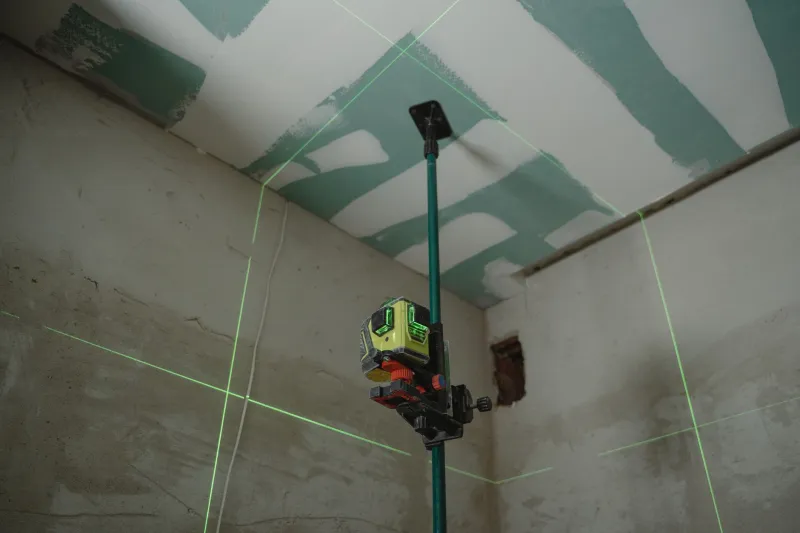
| Ceilings | Grid misalignment | Set out from datum, check before tiles | Ceiling inspection |
| Joinery | Gaps at junctions | Template and dry-fit | Bench and site check |
| M&E | Unlabelled services | Label as installed | Services walk |
| Finishes | Patchy paint | Consistent preparation and lighting | Finishes sign-off |
The matrix should be reviewed at the start of each project and updated when a defect recurs. That last point matters. A matrix that never changes is a filing cabinet; a matrix that records repeat problems becomes a learning tool.
Making the routine stick
Quality routines fail when they depend on one person's memory. They succeed when they are built into the programme, the meeting cycle and the document control system. That means putting sign-offs in the programme, keeping the client walk-through in the diary, and making photographic evidence a condition of trade completion rather than an optional extra.
The aim is not to eliminate every snag. It is to make snagging proportionate: a short, focused list of genuine issues rather than a second construction phase. For UK fit-out clients, that is the difference between a handover that feels controlled and one that feels like an ending. Quality is not a final inspection. It is the habit that makes the final inspection uneventful.