Capacity Before Carpentry: Locking Utility Connections into the Fit-Out Programme
A fit-out programme is normally built around the trades that occupy the most weeks: partitions, ceilings, mechanical and electrical first fix, then finishes. Utility connections sit outside that logic. They are governed by parties the project team does not directly control — distribution network operators, independent connection providers, water undertakers and gas transporters — and their timescales respond to quotation queues and network studies rather than to site pressure. Where capacity has been assumed rather than confirmed, the closing fortnight of a programme becomes a negotiation with an infrastructure provider.
The purpose of this article is to set out how electricity, gas and water connections can be placed on the critical path from the outset, and what evidence a completed fit-out should hold when the keys change hands.
Confirm capacity before the design hardens
The starting point is a load case, not a cable size. Before the layout is frozen, the project should establish the maximum electrical demand after diversity, the gas load if catering or heating depends on it, and the required flow rate and pressure for domestic and process water. These figures should be compared against what the building already holds: the rating of the existing supply, the spare capacity recorded by the landlord, and any diversity already claimed by other tenants in a multi-let property.
Where the answer is marginal, the design should not proceed on optimism. A capacity upgrade is a design decision with structural, spatial and programme consequences — a larger meter room, additional ventilation, a new riser or a changed plant location — and each of those consequences is cheaper to absorb before the setting-out drawing is issued than after the first stud wall is up.
Identify who actually provides the connection
The delivery route differs by utility and by site, and confusing them is a common source of delay. For electricity, the local distribution network operator owns the existing network, but contestable works may be undertaken by an independent connection provider, and in multi-let or private network arrangements an independent distribution network operator may take on the adopted assets. Metering sits with a meter operator and the supply contract with a licensed supplier. For gas, the transporter holds responsibility for the service pipe up to the meter. For water, the local undertaker controls the connection to its main, while internal distribution remains the project's responsibility.
Each of these parties starts its clock at a different moment. A quotation is not a commitment; acceptance, payment and the resulting design approval trigger the work. Programmes that record only the date a quotation was received, rather than the date it was accepted, tend to lose weeks without noticing.
Treat temporary supply as a planned phase
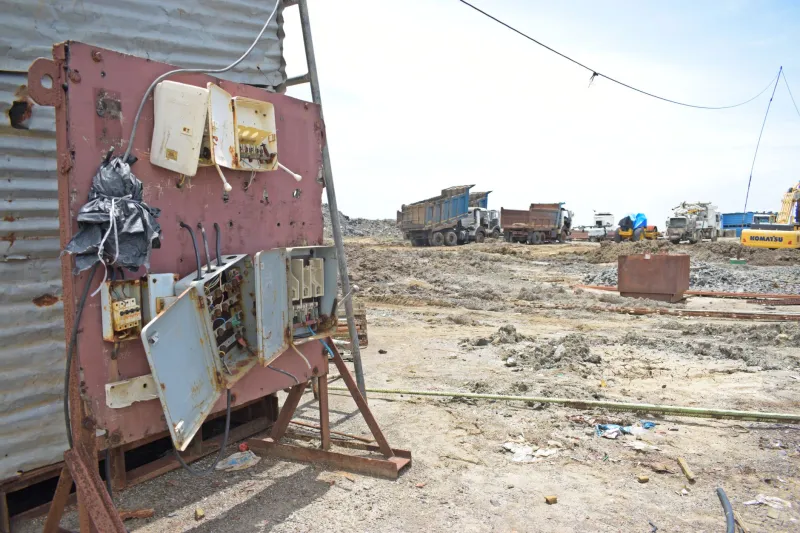
Many fit-outs need power and water long before the permanent supply can be energised. Welfare units, drying, temporary lighting and early commissioning all draw on services that must be arranged deliberately. A temporary builder's supply, correctly metered and distributed, is not an overhead to be minimised but a phase of the works with its own design, approval and dismantling.
The sequencing question is straightforward to state and harder to deliver: the permanent supply should be energised before the systems that depend on it are commissioned, not afterwards. Where the permanent connection is late, commissioning slips and the final inspection is compressed. Bringing forward the date at which the permanent meter is live — even if the building is not yet occupied — is frequently the single most effective programme intervention available.
Meter positions, plant space and access
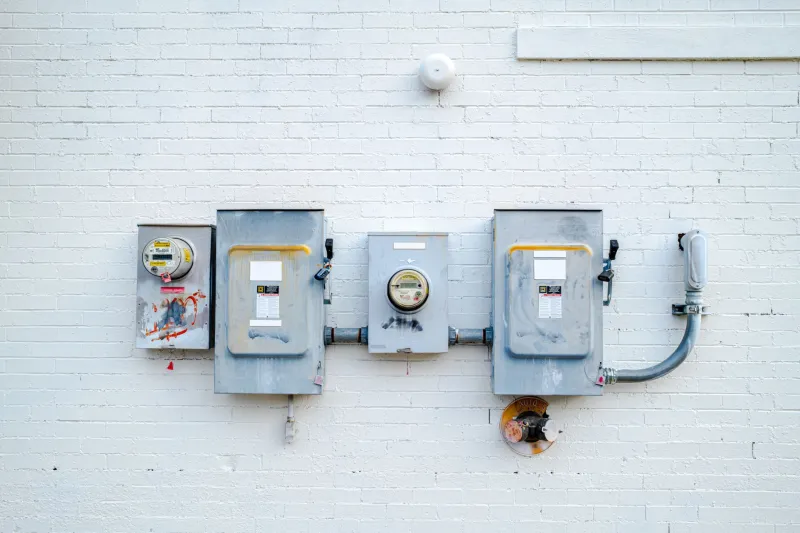
Meter and plant locations are often decided by others and inherited by the fit-out. That inheritance should be tested. Reading access, ventilation, fire separation, protection from vehicular impact, and the route of containment from the meter position to the distribution board all need to be resolved on drawings before installation. In listed or constrained buildings, the route may be the binding constraint rather than the capacity itself.
Landlord approval for alterations to common areas, risers and external walls should be secured in parallel with the utility application, not after it. Consent processes and network applications rarely run at the same speed, and neither waits for the other.
The evidence a handover should carry
A clean handover of utility connections rests on documents rather than assurances. The pack should include the meter point administration number and meter point reference number for each supply, confirmation of the supply agreements and their start dates, the electrical installation certificate and the schedule of test results, gas safety documentation for the installed carcass and appliances, and confirmation that notified work has been completed in accordance with the Water Supply (Water Fittings) Regulations. As-installed drawings showing the actual routes, sizes and isolation points belong in the same folder, together with the commissioning records for anything the utility supply energises.
This evidence is not administrative decoration. It is what allows the occupier to change supplier without argument, what allows a future contractor to isolate safely, and what allows the landlord to demonstrate that a tenanted supply has been installed to an accountable standard.
A sequence that holds under pressure
- Establish the load case and compare it with recorded spare capacity before the layout is fixed.
- Confirm the delivery route for each utility and record acceptance dates, not quotation dates.
- Design the temporary supply and its dismantling as a phase of the works.
- Resolve meter positions, routes and consents on drawings before ordering.
- Target permanent energisation ahead of systems commissioning.
- Assemble meter numbers, certificates and as-installed records as the work proceeds.
Utility connections reward early decisions and punish late assumptions. Placing them on the critical path at the outset costs a meeting or two; discovering them in the final fortnight costs the programme.