A Degree of Care: Winter Temperature Control for Fit-Out Finishes

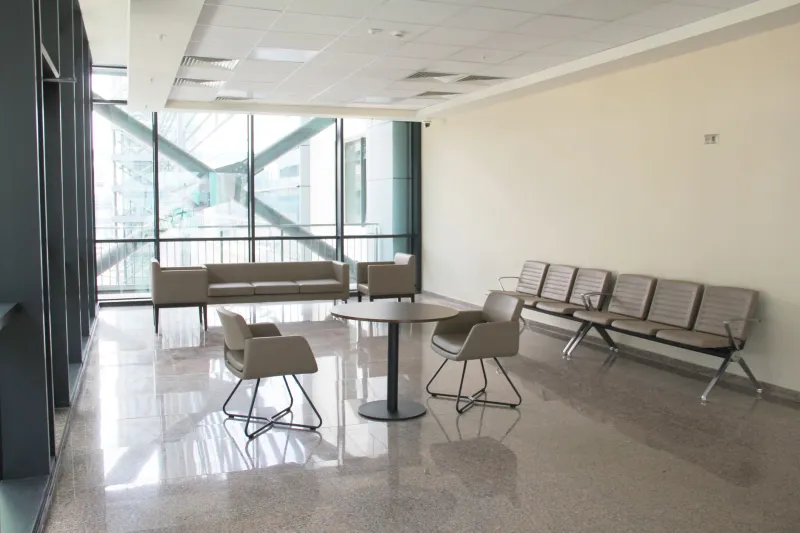
Photo: David Smith , CC BY-SA 2.0, via Wikimedia Commons
Winter in the UK rarely arrives with a single decisive freeze. More often it arrives as a series of cold snaps, frosty mornings and damp, grey days that leave unheated shells hovering near the limits of what finish products will tolerate. For a fit-out team, the risk is not that work stops. It is that work continues in conditions that are marginal, and the consequences are buried under a coat of paint or a tiled floor.
Finish quality in winter is therefore a quality assurance problem before it is a programme problem. The thermometer is not background information. It is a site record, a sequencing input and, ultimately, part of the evidence that the installed finish was fit for purpose.
Establish the limits before materials arrive
Temperature-sensitive finishes are governed by two numbers: the ambient air temperature and the substrate temperature. Manufacturer instructions usually specify a minimum for application and a further period during which the temperature must not fall below that minimum. Five degrees Celsius is a common threshold, but it is not universal. Some adhesives, resins and sealants require ten degrees or more. The mistake is to treat five degrees as a site-wide rule of thumb and ignore the datasheet.
Before the first tub is opened, the finish schedule should carry the relevant thresholds for each product, together with curing times and any restrictions on draughts or ventilation. That schedule should be available to the supervisor, not filed in a site office drawer. Where products from different manufacturers meet, such as a screed, a smoothing compound and a resilient floor covering, the most demanding threshold governs the zone until the last curing period has elapsed.
The morning round: what to check before trades start
A winter morning check is short, but it needs to be consistent. The first task is to read overnight minimum and maximum temperatures in each work zone. A single thermometer by the site door tells you almost nothing about the temperature in a north-facing room, a stair core or an enclosed plant area.
Surface temperature matters as much as air temperature. A contact probe or infrared thermometer should be used on slabs, screeds, wall substrates and window reveals before finishes are applied. If a surface is below the product threshold, the trade should not start, even if the air feels mild.
Heaters should be checked for operation, fuel level, thermostat setting and safe positioning. Doors and temporary screens should be checked for draughts and for the previous evening's closures. Frost on glazing, condensation on steelwork or cold spots near openings are all warning signs. The readings should be written down, with the time, zone and action taken. A missing record is not a small administrative gap; it is a missing piece of quality evidence.
Heat without adding water
Temporary heating is not a single decision. Open-flue paraffin and LPG heaters release water vapour and combustion products into the space. In a sealed building they can raise humidity and create a condensation risk at the very moment finishes need dryness. Indirect electric heaters, ducted warm air with combustion products kept outside the work area, or properly flued units are generally safer. Carbon monoxide monitoring is not optional where fuel is burned.
The aim is to heat the zone, not the whole shell. Temporary screens, doors and draught seals allow the team to maintain conditions where work is happening without paying to warm empty floors. That zoning also reduces the risk of warm, moist air migrating to cold surfaces and condensing there. Heating should be planned with the same care as any other temporary service: capacity, distribution, fuel, monitoring and emergency arrangements.
Cold bridges and the zones that catch you out
Air temperature can be compliant while a surface is not. External wall reveals, slab edges, stair cores, service risers, lift lobbies and rooms adjacent to open openings are common cold bridges. A floor near a loading door may read several degrees below the general air temperature. A window reveal may be colder still.
These are the places where adhesives fail to grab, paints dry unevenly and sealants skin over without curing. An infrared thermometer is a useful first pass, but it should be backed up by contact readings where a finish is about to go down. If a zone cannot be brought up to temperature, the correct response is to postpone the finish or isolate the zone, not to proceed and hope the product tolerates it.
Moisture: the quiet counterpart to cold
Cold and damp are related but not identical. Wet trades release moisture, and cold surfaces are more likely to attract condensation. Dehumidification and controlled ventilation may be needed alongside heating. Sealing a wet screed beneath an impermeable finish is a particular risk; the moisture has to go somewhere, and trapping it can lead to failure months later.
Moisture testing should be carried out before moisture-sensitive finishes are installed, and the results should be recorded. Paints and coatings need ventilation to dry and cure, but direct draughts can cause uneven finish. Sealants and mastics should not be applied to damp or frosty surfaces. The manufacturer's instructions on drying and curing conditions should be treated as part of the specification, not as optional guidance.
Sequencing the programme around the thermometer
The programme should acknowledge that winter changes the order of work. Temperature-sensitive trades may need to follow temporary weathertightness, heating installation and moisture control. Grouping those trades into warmer, controlled zones can be more efficient than spreading them across a cold building.
Buffers matter. A cold snap can close a window of suitable conditions for several days, and the Christmas shutdown can leave a building cold for longer than expected. The team should agree who provides temporary heating, who pays for it and who monitors it. If the client intends to switch on permanent heating before handover, that should be confirmed in writing, with clear conditions for operation.
Records that defend the finish
Daily records are the difference between a quality assurance story and an argument. Minimum and maximum temperatures, surface readings, heater checks, moisture readings, photographs and corrective actions should all be kept together. Where a product was applied near its lower limit, the record should show that the substrate and air temperatures were within specification and that the curing period was protected.
At handover, the client should receive clear advice on protecting finishes from frost and condensation, including any requirement to maintain background heating. A finish that was installed correctly can still fail if the building is allowed to go cold immediately after occupation.
For PR Installations, the discipline is straightforward: know the threshold, check the zone, heat without adding moisture, record the evidence and do not let the programme override the product. A degree of care in winter is cheaper than a return visit in spring.